Bedroom interior design that stays calm and cool.
6 min readBy Homlum Architecture
Good bedroom interior design is less about a feature wall and more about a room that stays cool, quiet and dry through a Kerala year. Heat, humidity and the monsoon affect where the bed goes, what the wardrobes are made of and which fabrics last. This guide walks through the bed wall, wardrobes, light, ventilation, colour, fabric choices and the attached bathroom, so the room feels calm on the first night and still feels that way years later.
Start with how the room will be used.
Before thinking about finishes, decide what the room has to do. A main bedroom in a joint-family home may also be a quiet place to work, pray or sit with a child. A room for elderly parents needs an easy route to the bathroom, firm seating and switches within reach of the bed. A child's room will change every few years.
Then fix the bed position, because almost everything else follows from it. A few principles help:
- Place the bed so you do not look straight into the door from the corridor, for privacy.
- Avoid putting the bed directly under a window that takes driving rain or harsh afternoon sun.
- Centre the ceiling fan over the bed rather than over the middle of the room.
- If there is an air conditioner, place the indoor unit so it does not blow directly onto the pillows.
- Leave enough room on both sides of the bed to walk and make the bed comfortably.
The bed wall and headboard.
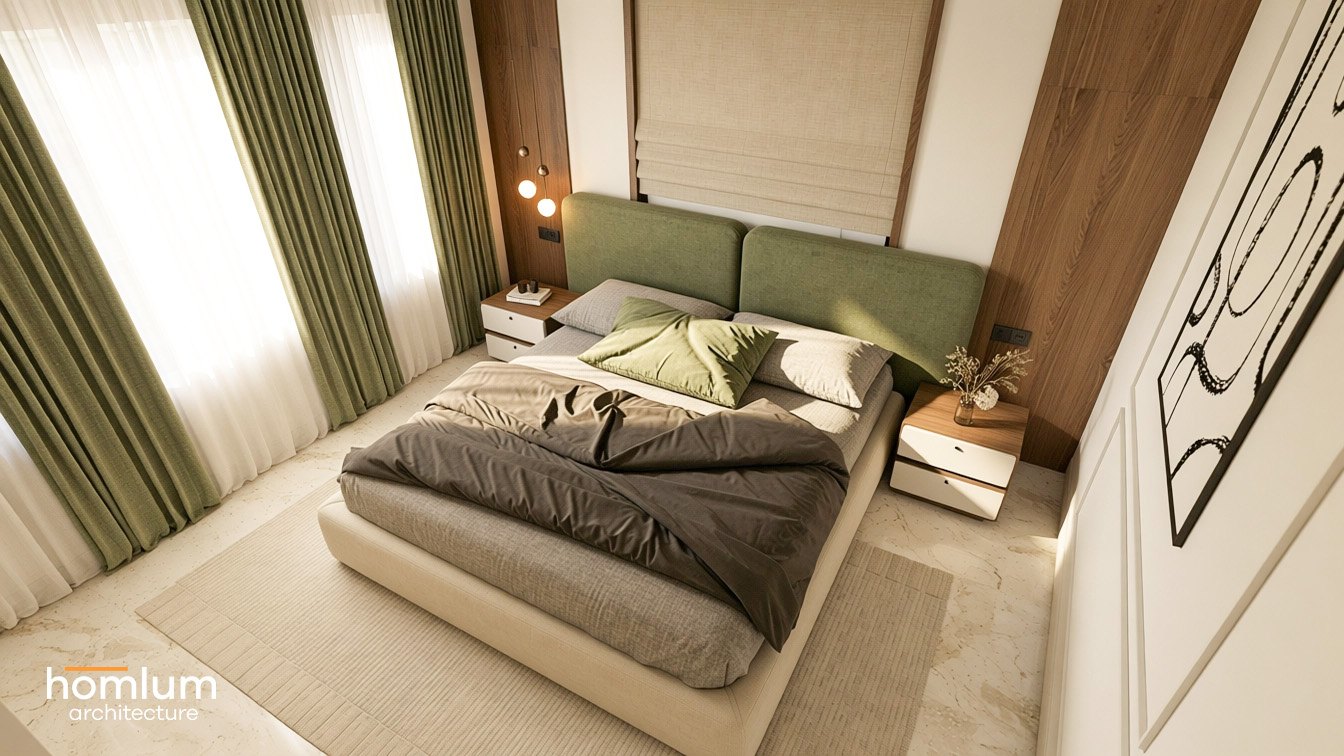
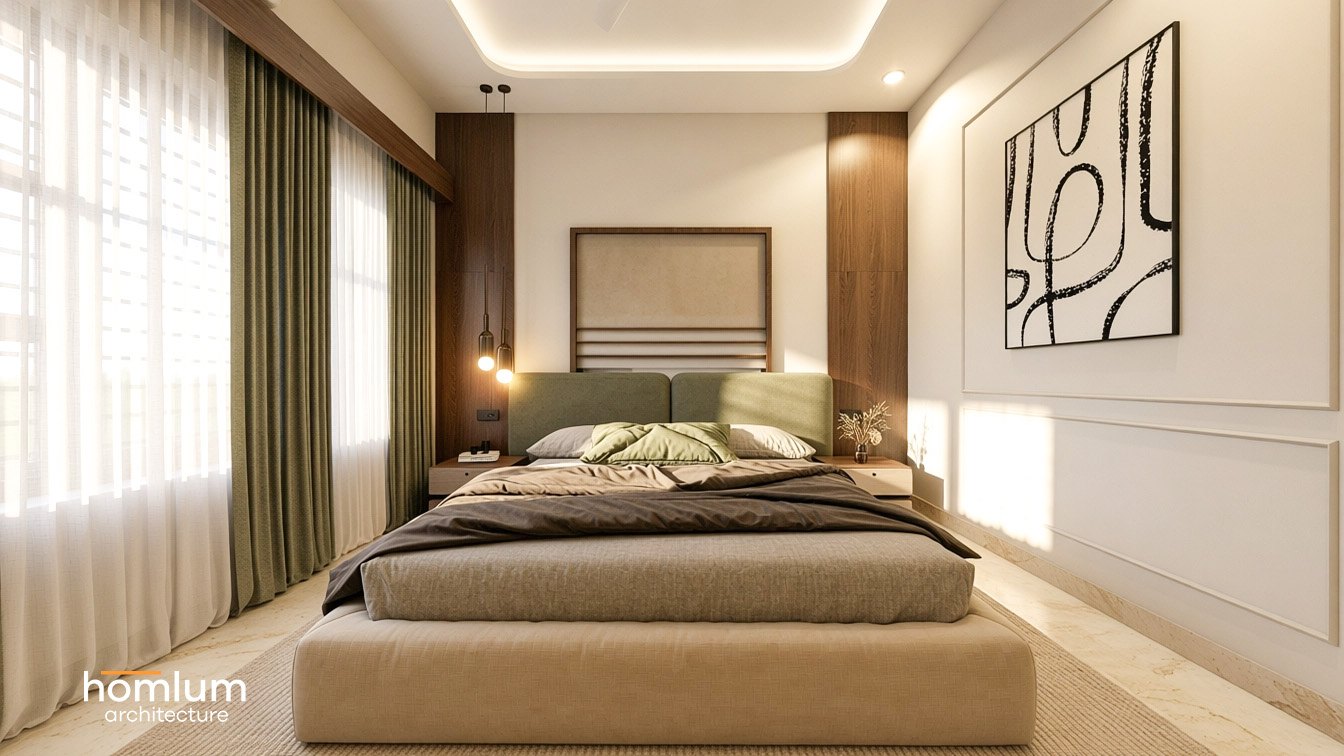
The wall behind the bed is the one you see when you walk in, so it is where most people want character. A headboard in fabric, timber veneer or painted panels gives the room a focus without filling it.
In a humid climate, choose carefully. Fixed fabric panels can hold dust and moisture, and in a damp corner they can develop mould. A padded headboard with a removable, washable cover is easier to live with. Timber or veneer panels need a gap and a proper backing board so air can move behind them and the wall can dry.
Keep the bed wall an internal wall where possible. External walls that take the monsoon can feel damp, and anything fixed to them suffers first. Build in bedside reading lights and charging points at the right height before the panels go up.
Wardrobes and storage that cope with humidity.
Wardrobes cause more trouble in Kerala bedrooms than any other item. Clothes left in a closed, damp cupboard through the monsoon can smell musty or spot with mould.
- Place wardrobes against internal walls, not against external walls or a wall shared with a wet bathroom.
- Ask for moisture-resistant board for the carcass and a small gap between the back of the wardrobe and the wall.
- Consider louvred or slotted shutters, or ventilation slots at the top and bottom, so air can move.
- Add a small light inside so you can see and check what is stored.
- Use a loft or upper section for suitcases, bedding and seasonal items.
Our guide to materials for a humid climate and the article on damp and termite protection cover the building side of the same problem.
A bedroom that breathes well will stay calmer and last longer than one that only looks good on the day it is finished.
Light, air and keeping a bedroom cool.
Orientation decides a lot. A bedroom facing east gets soft morning light and stays cooler by evening. One facing west takes the low afternoon sun and can stay warm well into the night, so it needs deep shading, external screens or heavier curtains on that side.
For air, windows on two walls are far better than one. Even a high ventilator on the opposite wall lets warm air escape and draws cooler air in. Our article on natural ventilation in a tropical home explains how to plan for it. Fit insect mesh to windows you want to keep open at night.
Plan light in layers: soft general light, reading lights at the bed and a low light for moving around at night. Two-way switching, so you can turn off the main light from the bed, is a small thing that makes a big difference. The guide to planning light in a home goes into switching and colour temperature.
Colour, fabric and the attached bathroom.
Soft, muted colours such as sage, warm white, sand and clay read as calm and cool in tropical light. Deep colours can work on one wall or in the headboard, as in this room, but too much dark colour makes a small room feel heavier in the heat.
Fabrics should breathe and be easy to wash. Cotton and linen suit Kerala far better than velvet or heavy synthetics, which hold heat and moisture. Line curtains for privacy and to cut early light, and choose a lining that can be washed. A cotton dhurrie or a flat-weave rug is easier to keep dry than a thick pile rug.
The attached bathroom needs its own planning:
- Keep the bathroom door out of direct view of the bed where the plan allows.
- Separate the wet shower area from the dry area with a screen or a change in level.
- Fit an exhaust fan and a window or ventilator so steam leaves the bathroom, not through the bedroom.
- Use a small threshold or step so water does not reach the bedroom floor.
- Ask your architect about waterproofing and drainage, and have it checked before tiling.
Common questions.
What colour is best for a bedroom in a hot climate?
Light, soft colours such as warm whites, sage, sand and pale grey tend to feel cooler and calmer. Darker colours work in small doses, on a headboard or a single wall. Look at samples in your own room at different times of day before deciding.
How do I stop wardrobes getting mouldy in the monsoon?
Keep wardrobes off external and bathroom walls, use moisture-resistant boards and leave a gap at the back. Ventilation slots or louvred shutters let air move through. Open them on dry days and avoid storing damp clothes.
Where should the ceiling fan go in a bedroom?
The fan should usually sit over the bed, not over the middle of the room, since that is where you need the air. Fix the bed position first, then mark the fan point on the ceiling before any false ceiling or plastering work.
Should the bathroom door open into the bedroom?
An attached bathroom door will open off the bedroom, but it helps to keep it out of direct line of the bed and away from the wardrobe. Good ventilation in the bathroom keeps moisture from drifting into the room.
If you are planning a bedroom or a whole home interior, talk to us and we can look at your rooms together.