Natural ventilation: keeping a Kerala home cool without air conditioning.
6 min readBy Homlum Architecture
Kerala is warm and humid for most of the year, and many new homes now rely on air conditioning in every bedroom. Good natural ventilation, planned from the first sketch, can keep a house comfortable for much of the year with fans alone and make any air conditioning you do install work less hard. This guide explains how air moves through a home and the design choices that make the biggest difference.
Why moving air matters in a humid climate.
In a dry climate, thick walls and small windows keep heat out. In humid Kerala, the problem is different. The air is often warm and damp, and your body cools mainly by sweat evaporating from the skin. That only works when air is moving across you. A breeze through a room can make it feel noticeably cooler even when the temperature has not changed.
Moving air also carries away moisture, which helps prevent the musty smell, mould and damp patches that are common in closed-up rooms during the monsoon. So ventilation in Kerala is about comfort and about keeping the building healthy.
Cross ventilation: openings on more than one side.
Cross ventilation is the simplest and most effective idea. Air enters through an opening on one side of a room and leaves through another on the opposite or an adjacent side. A room with windows on only one wall gets very little air movement, however large the window.
A few principles help:
- Give every main room, especially bedrooms, openings on at least two walls.
- Place the inlet on the side facing the breeze and the outlet across the room, so air passes through the space where people sit and sleep.
- Keep the path clear. Wardrobes, solid partitions and full-height doors can block it.
- Use doors with ventilators above, or louvred panels, so air can move between rooms when doors are closed for privacy.
Breeze direction varies from site to site. On the coast, sea breezes are an asset. On sloping plots in the midlands and hills, air tends to move up and down the slope. Neighbouring buildings and trees can redirect it. Ask your architect to study your site and plan openings around it, rather than relying on a standard plan.
Stack effect, high windows and courtyards.
Warm air rises. If a house has openings low down for cool air to enter and openings high up for warm air to escape, air will keep moving even on a still day. This is the stack effect.
You can use it with high-level windows or ventilators near the ceiling, a double-height living space with openings at the top, a stair core that acts as a chimney, or an open courtyard. The traditional nadumuttam, a central courtyard open to the sky, works this way, drawing air through the rooms around it. Our article on the nadumuttam courtyard house looks at how to adapt the idea for a modern home.
The coolest Kerala homes are planned so that air has a clear way in, a clear way through and a clear way out.
Jaalis, shading and orientation.
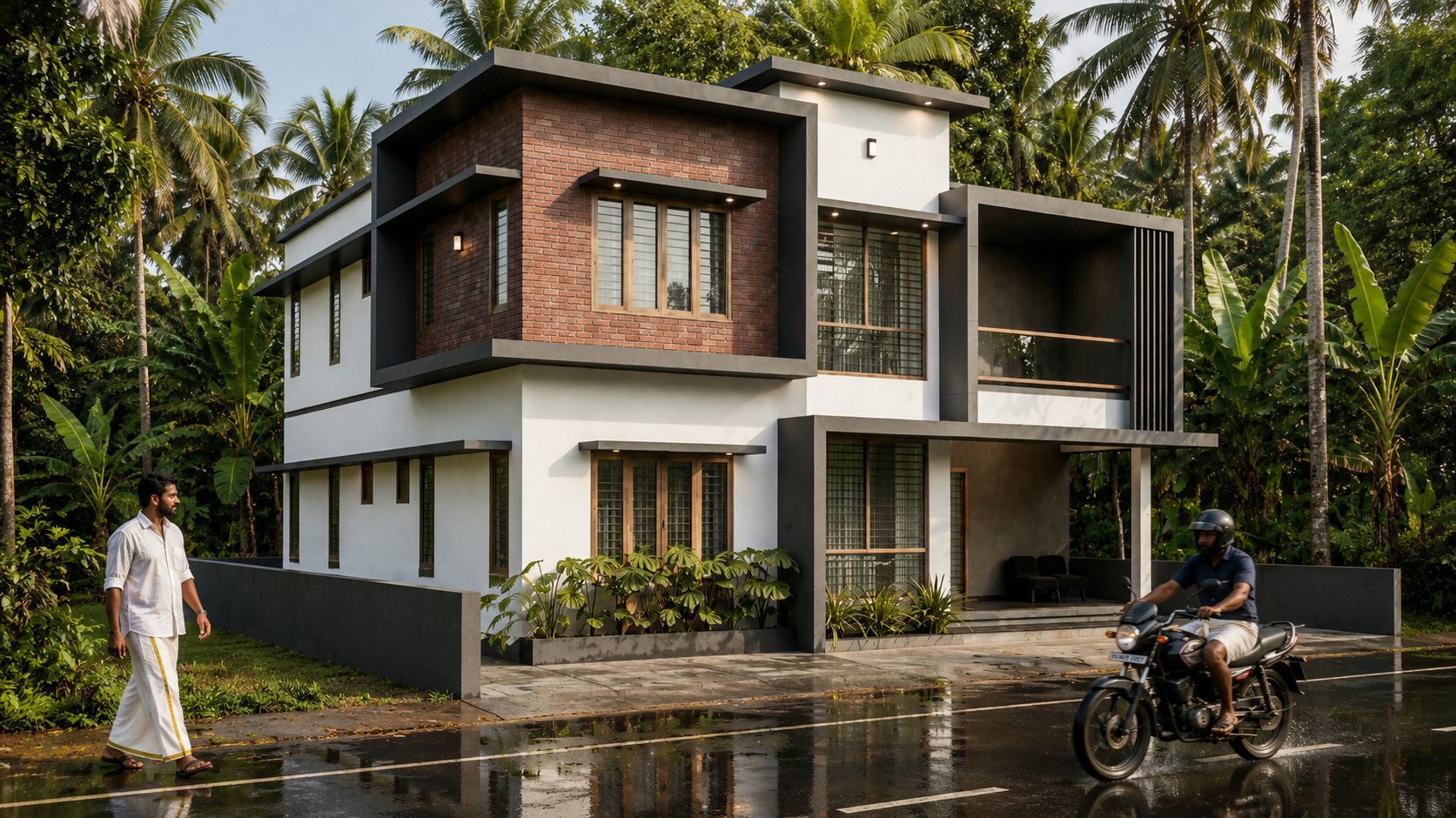
A jaali is a perforated screen, made of brick, terracotta blocks, concrete or stone. It lets air and filtered light through while blocking direct sun and giving privacy. Jaalis work well on stair walls, utility areas, west-facing walls and boundaries where you want air movement without large open windows. Make sure rain cannot be driven through them into rooms that must stay dry.
Ventilation and shading work together. A room cannot stay cool if the sun is heating its walls and glass all afternoon. Useful measures include:
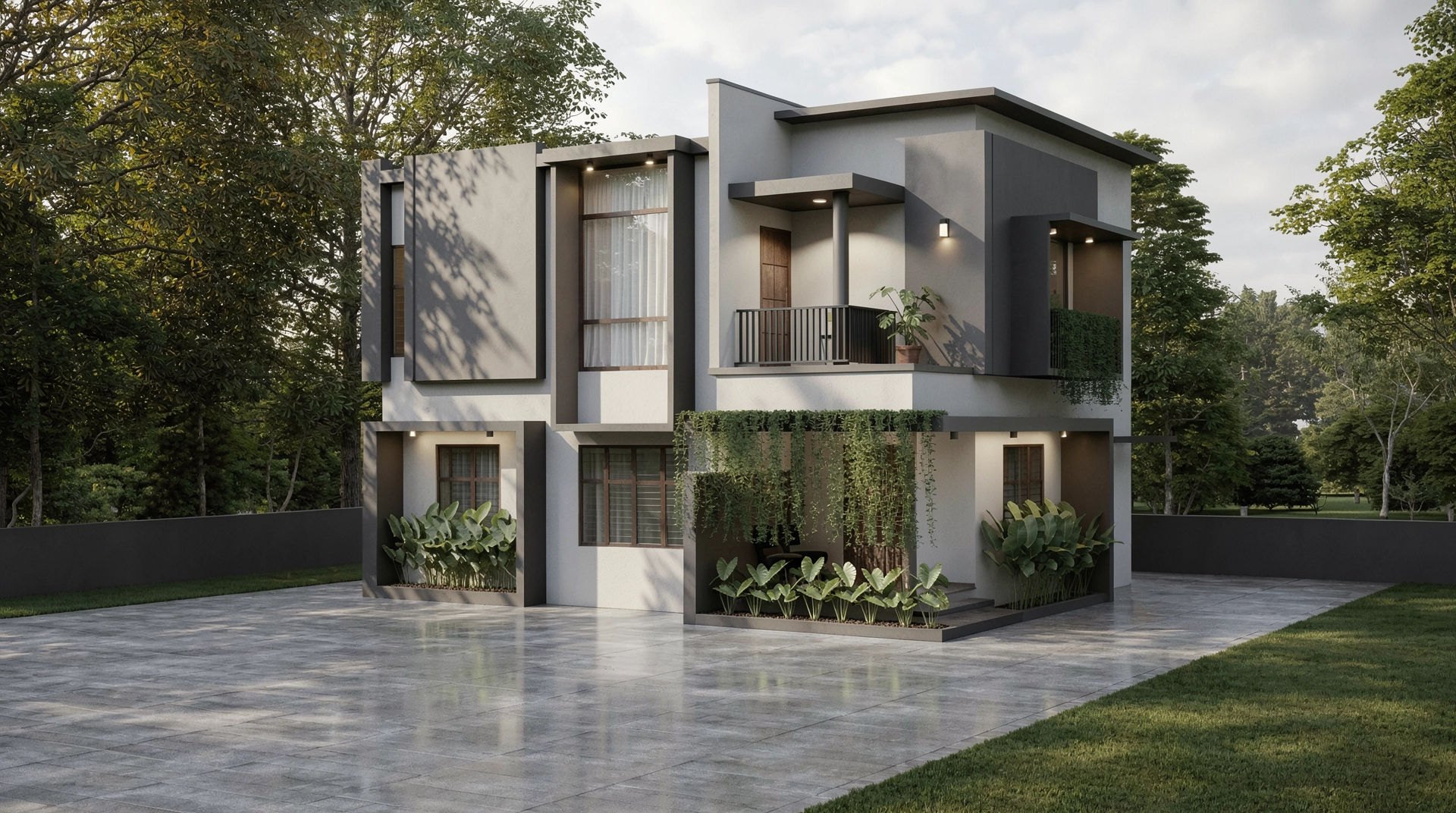
- Deep roof overhangs, sunshades over windows and verandas on the sunniest sides.
- Fewer and smaller openings on the west, where the low afternoon sun is hardest to block.
- Trees and planting on the west and south to shade walls and cool the incoming air.
- Light-coloured roofs and walls, and roof insulation or a shading roof over flat slabs.
Orientation ties this together. Where the plot allows, long walls facing north and south are easier to shade than long walls facing east and west. On narrow urban plots you often cannot choose, so shading, courtyards and careful window placement do more of the work. Our guide to designing for the monsoon covers how to keep openings usable in heavy rain.
Room depth and the shape of the plan.
Air struggles to reach the back of a deep room or a deep, compact plan. Rooms that are one room deep, with windows on both sides, ventilate far better than rooms tucked into the middle of a large block. If your plan has a deep central area, a courtyard, a light well or a double-height space can bring air and light into it.
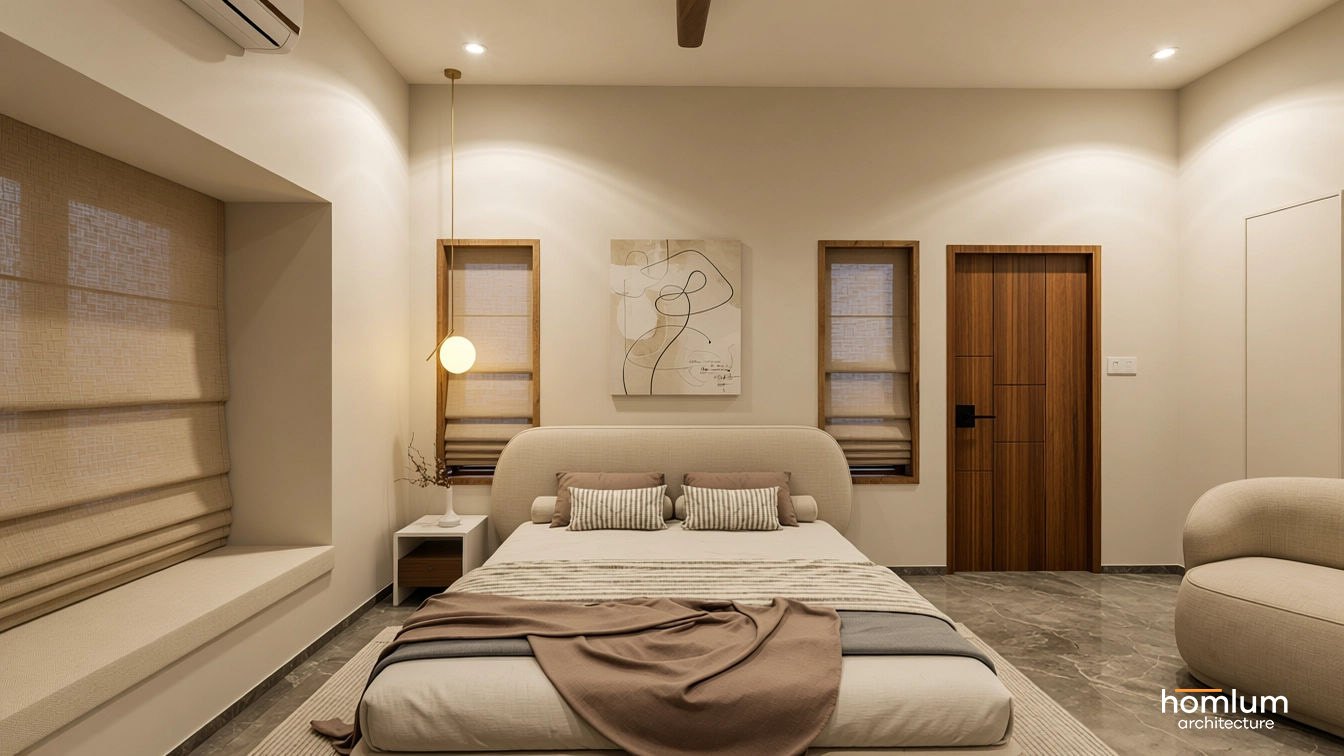
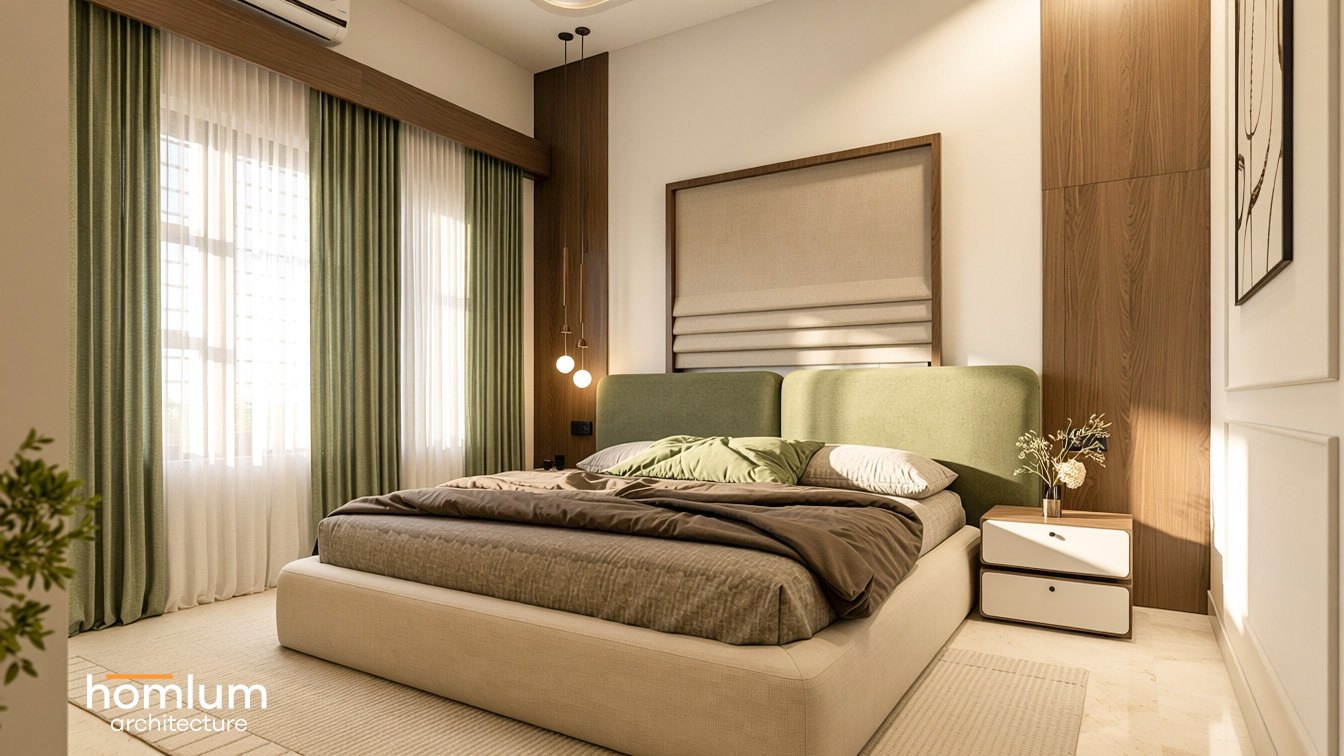
Ceiling height helps as well. Higher ceilings give warm air somewhere to collect above head height, and they suit ceiling fans. Plan fan positions with the furniture layout, so the fan sits over the bed or the seating rather than over an empty corner. Our article on bedroom interior design covers how to plan a bedroom around air, light and furniture.
Finally, think about how the house will be used. Windows with secure grilles or louvres can stay open at night to let cool air flush through, without worrying about safety or sudden rain. Mosquito mesh shutters let you keep openings open in the evening. These small details decide whether good ventilation is used or ignored. For more ways to cut energy use, see our guide to an energy-efficient home in Kerala.
Common questions.
Can a Kerala home stay cool without air conditioning?
For much of the year, a well-designed home can be comfortable with fans and natural ventilation. The hottest, most humid weeks may still be uncomfortable for some people, especially in bedrooms. Good ventilation means any air conditioning you add is needed less often and works more efficiently.
What is cross ventilation in a house?
Cross ventilation is air flowing through a room from an opening on one side to an opening on another side. It needs at least two openings, ideally on opposite walls, with a clear path between them. Rooms with windows on one wall only get far less air movement.
Are jaalis good for ventilation?
Yes. A jaali lets air move through while cutting direct sun and giving privacy. It works well on stairwells, utility areas and sunny walls. Place it where driving rain will not soak floors or furniture.
Which direction should windows face in Kerala?
There is no single answer, because breeze and sun vary by site. As a general guide, openings on the north and south are easier to shade, and large unshaded openings on the west bring in strong afternoon heat. An architect should check your site before fixing window positions.
If you want a home that stays comfortable with less reliance on air conditioning, talk to us about your plot and how you plan to live in it.