Planning light in a home: daylight and fixtures.
7 min readBy Homlum Architecture
Good home lighting design starts long before you pick a pendant. It begins with where the sun comes from, how deep the verandahs are and where switches will sit, and much of it has to be fixed before the walls are plastered. This guide covers daylight and glare, layers of artificial light, colour temperature, switching and outdoor lighting for homes across Kerala.
Start with daylight and orientation.
Daylight is the best light a home has, and in Kerala it comes with heat. The aim is plenty of soft, even light without direct sun pouring in.
- North light is steady and soft through the day. It suits studies, living rooms and anywhere you read or work.
- East light is bright and gentle in the morning, good for kitchens, breakfast areas and bedrooms.
- South light is strong for much of the year but easier to shade with deep eaves and overhangs.
- West light comes in low, hot and glaring in the afternoon. West-facing rooms need deep shading, screens, jaalis or planting.
Traditional Kerala houses handle this well. Deep sloping roofs and the poomukham, the front verandah, shade the walls, while a nadumuttam, the open central courtyard, brings light and air into the middle of the house. Our article on the nadumuttam courtyard house explains how it works.
Glare is the main problem to design out. A bright window at the end of a dark corridor, or a television opposite a west window, is uncomfortable however much light there is. Light that bounces off a verandah floor, a pale wall or a courtyard is gentler than direct sun. High windows and clerestories spread daylight deeper into a room and also let hot air escape, so daylight and ventilation are best planned together.
Remember the monsoon. On dark rainy days, many rooms need artificial light at midday, so plan for that rather than for a bright summer morning.
Plan artificial light in layers.
A single bright light in the middle of the ceiling makes a room flat and harsh. Most rooms work better with three layers that can be used separately.
- Ambient light gives general, even light for moving around. It can come from ceiling lights, cove lighting or wall lights that wash the ceiling.
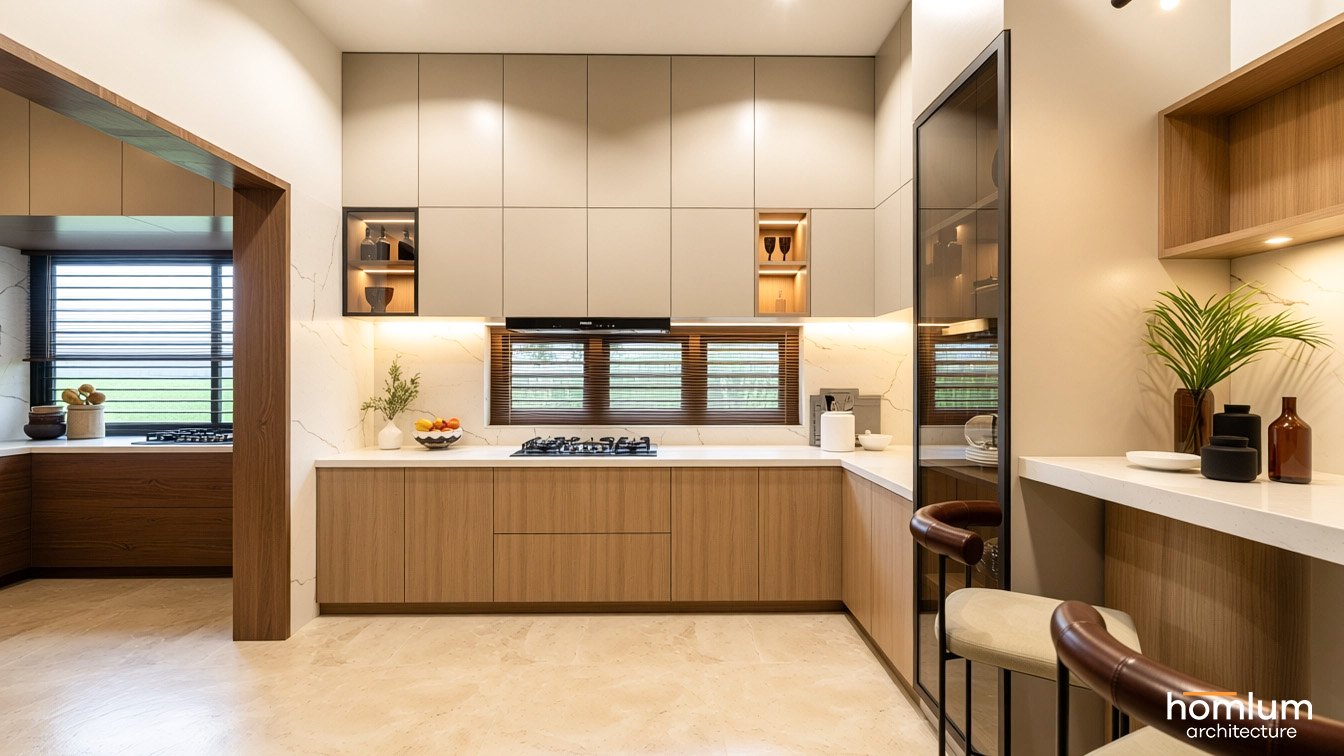
- Task light goes where you work: under kitchen wall cabinets, over the dining table, beside the bed, at a desk or a mirror.
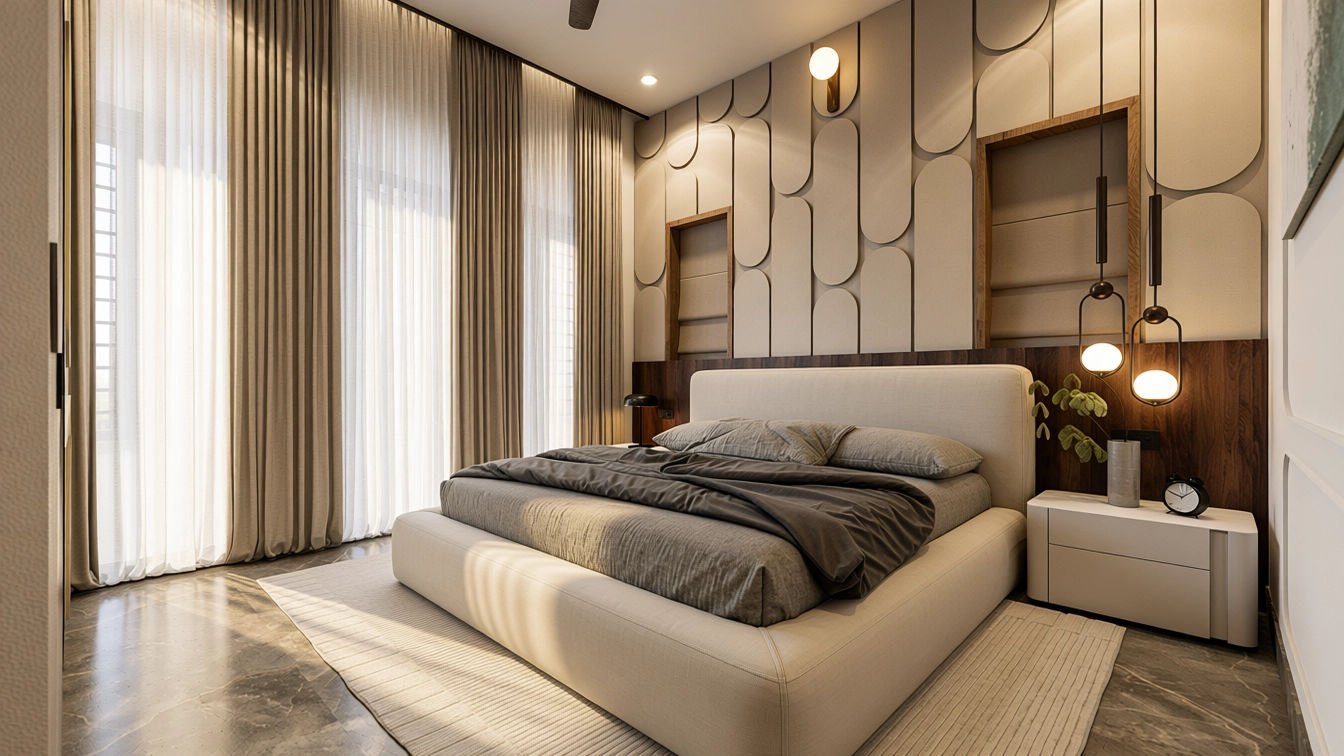
- Accent light picks out a texture, a niche, artwork or a feature wall, and gives the room depth in the evening.
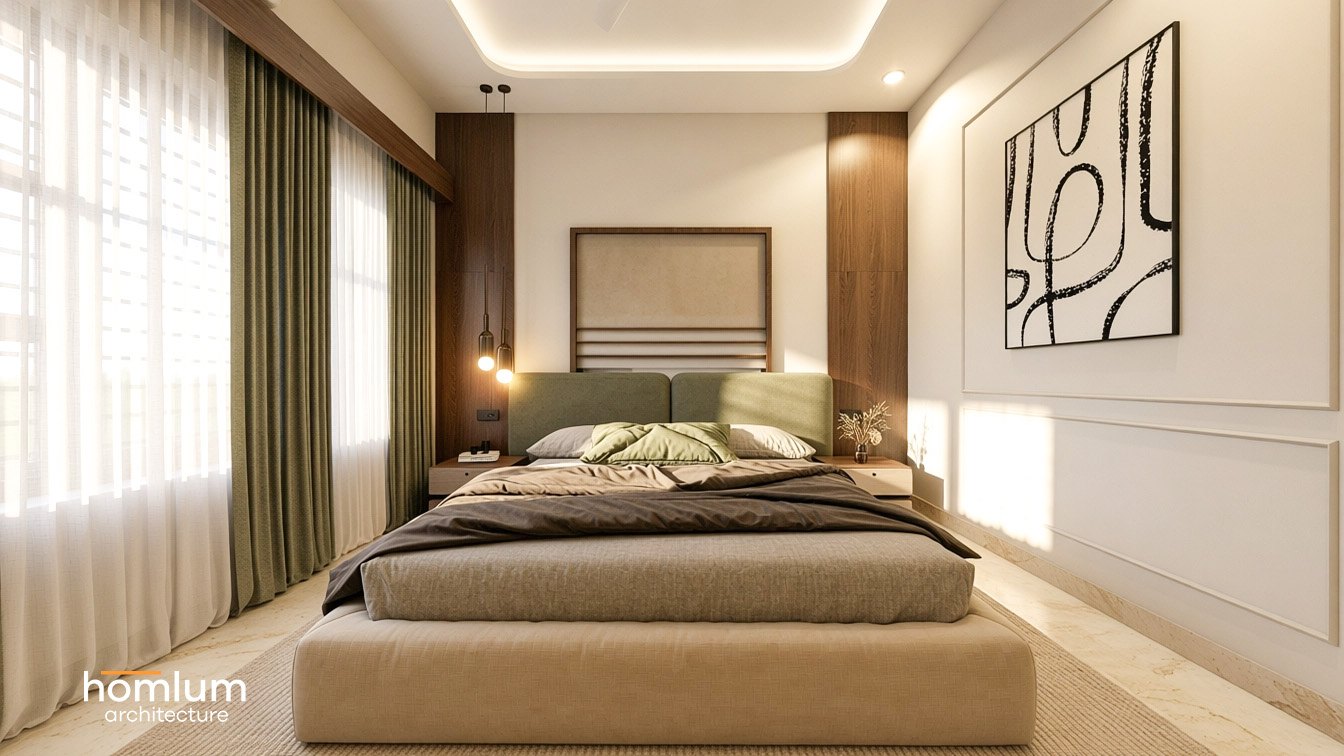
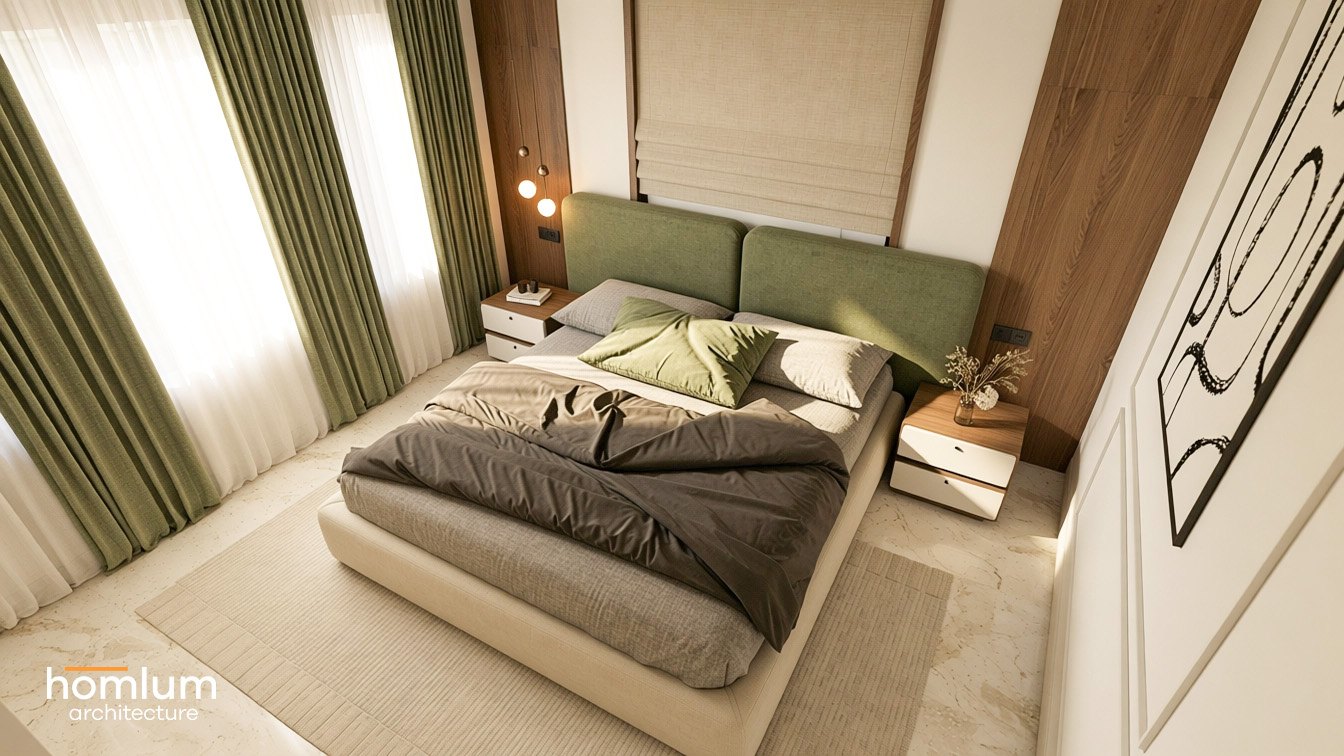
In a bedroom, for example, the ambient light might be soft and indirect, the task light a reading lamp at each side of the bed, and the accent light a glow on the headboard. Our guide to bedroom interior design covers that room in more detail. In a kitchen, task lighting over the counter matters most; see kitchen design for Kerala homes.
Plan where you need light and where every switch goes before a single wall is plastered.
Colour temperature and choosing fixtures.
Light sources come in different colour temperatures, measured in kelvin. Lower values give warm, yellowish light; higher values give cool, bluish-white light.
Warm white feels relaxed and suits bedrooms, living rooms and dining areas in the evening. Neutral white suits kitchens, bathrooms and work areas where you need to see colour and detail clearly. Very cool white can feel clinical in a home. Whatever you choose, keep it consistent within a room, because mixing warm and cool lamps in one space looks untidy.
When choosing fixtures, look at more than the shape:
- Is the light source hidden from your eye, or will it glare when you sit or lie down?
- Does it render colours well, so food, skin and fabric look natural? Ask the supplier about colour rendering.
- Is it rated for the location, especially in bathrooms, kitchens and covered outdoor areas?
- If you want dimming, are the lamp, driver and dimmer compatible?
- Can the lamp or driver be replaced easily, or does the whole fixture need changing?
In humid coastal areas, choose fixtures with good corrosion resistance and sealed housings where moisture is likely.
Switching and points planned before plastering.
This is where most homes go wrong. Once walls are plastered and ceilings closed, every new point means chasing walls, patching and repainting.
Ask your architect or designer for an electrical layout that shows every light, switch, socket, fan point and data point, and walk through it room by room. Think about how you will move through the house at night.
- Put switches at the door you enter by, on the latch side.
- Use two-way switching for stairs, long corridors and bedrooms, so you can switch off from the bed.
- Group switches logically, and label them if the panel is large.
- Place sockets for bedside lamps, desk lights and chargers where furniture will actually go.
- Provide points for any lights inside wardrobes, niches or under cabinets.
- Keep conduits for future fittings even if you will not buy them yet.
Photograph every wall before plastering so you know where conduits run. Electrical design and safety, including earthing and protective devices, should be designed and checked by a qualified electrical engineer or licensed electrician.
Outdoor and garden lighting.
Outdoor light is about safety first and atmosphere second. Light the gate, the path, the steps, the car porch and the entrance so people can see where they walk. On sloping plots, every change of level needs light.
Avoid bright floodlights that glare into neighbours' windows or your own. Low path lights, wall lights washing down and a few lights in trees or against a textured wall usually look better and use less energy. Timers or daylight sensors make sure lights come on without anyone remembering.
All outdoor fittings must be rated for rain and humidity, and cables and junctions need proper protection. Heavy monsoon rain finds every weak joint. If you are planning a garden, our guide to tropical garden landscape design covers how lighting fits the planting.
Common questions.
Warm white or cool white for a home?
Warm white suits most living spaces and bedrooms, especially in the evening. Neutral white works well in kitchens, bathrooms and study areas where you need clear light. Keep one colour temperature within a room for a consistent look.
How many lights does a room need?
There is no fixed number. It depends on the room's size, ceiling height, wall colours and what you do there. Plan by layers instead: some general light, task light where you work or read, and an accent or two, each on its own switch.
Is cove lighting a good idea?
Cove lighting gives soft, indirect light and can make a ceiling feel higher. It works best as one layer alongside task lights, not as the only light in a room. Make sure the fittings can be reached for replacement.
How do I reduce glare from west-facing windows?
Shade the window from outside with deep eaves, a verandah, louvres, a jaali or planting, which also keeps heat out. Inside, light-filtering curtains or blinds help. Avoid placing a television or a workspace facing the window.
If you are planning light for a new home or an interior, talk to us and we can go through the rooms with you.