Materials that age well in a humid climate.
6 min readBy Homlum Architecture
Kerala is hard on buildings. Heavy rain, long humid months, salt air on the coast and strong sun between the showers all work on walls, roofs and floors. Some materials age well in a humid climate and gain character as they weather, while others stain, swell or rot within a few years, and this guide looks at where each common material belongs in a Kerala home and how it changes over time.
What humidity and rain do to a building.
Before choosing materials, it helps to know what they will face:
- Moisture soaks into porous surfaces, feeding moss, algae and mould, and making paint blister and peel.
- Driving rain reaches walls and joints that the roof does not cover.
- Quick cycles of wetting and drying open fine cracks and loosen finishes.
- Termites and fungi thrive in damp timber and soil.
- Salt air near the coast and backwaters corrodes steel and fixings.
Good detailing does as much as good materials. Overhangs, drip grooves, a raised plinth and ventilation protect whatever you build with. The article on designing a home for the monsoon covers those details.
Where you build matters too. A house on the coast faces salt. One in the hills of Wayanad or Idukki faces cool, misty conditions and long wet spells. One in the backwaters sits on soft, wet ground. A material that works in one place may need different detailing in another.
Laterite: the local stone of the north.
Laterite is quarried mainly in the north of the state and has been used for walls for generations. It is soft when cut and hardens as it is exposed to air, which makes it easy to work. Its rough, porous surface and warm red colour suit the landscape.
Laterite breathes, which helps walls stay comfortable, but the same porosity means it takes up water. Exposed laterite darkens as it weathers and can grow moss in shaded, wet spots. Some owners love that; others find it a nuisance. Use it where an overhang protects the wall, keep it off the ground with a solid plinth, and consider a breathable sealer if you want to slow staining. Quality varies from quarry to quarry, so look at the blocks before you buy. The guide on building with laterite goes further.
Timber and clay tiles: keep them dry and ventilated.
Timber has a long history in Kerala homes, from carved ceilings to doors, windows and roof frames. Teak and jackfruit wood (plavu) are traditional favourites, valued for how they handle moisture and how they age. Timber's enemies are constant damp, poor ventilation and termites. It ages well when it is:
- properly seasoned before use, so it does not shrink or warp later
- treated against termites and fungal attack
- kept off the ground and away from splash zones
- protected from direct rain by overhangs or verandahs
- finished with an oil or polish that can be renewed, rather than a thick coat that traps moisture
The article on protecting a house from damp and termites has more on treatment.
Clay roof tiles shed rain quickly, keep the house cooler than a bare concrete slab and weather into soft, uneven tones. Over time they can collect moss and lichen, especially on shaded slopes, and the odd tile cracks or slips. Both are easy to put right if the roof is accessible. A tile roof ages well when the slope suits the tile, the frame below is sound and treated or protected from rust, and valleys and ridges are carefully detailed. The guide to clay roof tiles compares the types.
In a humid climate, the best materials are the ones that can get wet and dry out again without harm.
Exposed concrete, brick and stone.
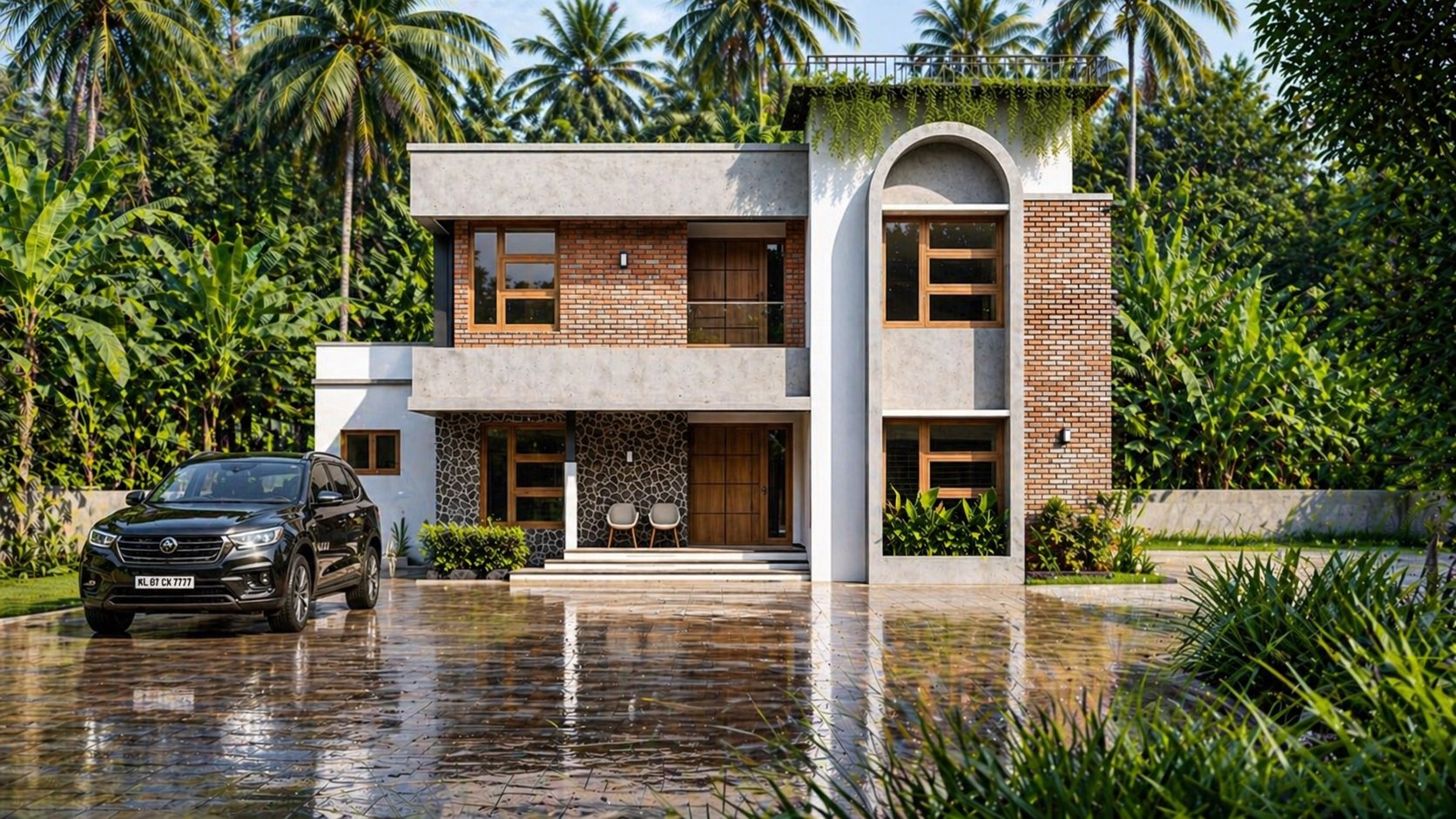
Exposed concrete can look striking, but it shows every flaw in a damp climate. It needs a good mix, careful formwork, enough cover over the steel and thorough curing. Left untreated, it streaks and darkens where water runs down it. A clear, breathable sealer and drip details at every edge help it age evenly. Expect it to change colour over the years and plan for that rather than fighting it.
Exposed brick brings warmth and texture. Well-fired bricks with tight, well-finished joints weather well, while poorly fired ones absorb water and grow moss. A water-repellent treatment, renewed from time to time, protects the surface.
Granite and other natural stone are among the most durable materials you can use, for plinths, steps, paving and cladding. Choose a textured finish for outdoor floors, because polished stone becomes slippery in the rain. Stone cladding needs sound fixings and joints that stop water getting behind it.
Finishes that let walls breathe.
Finishes are where humidity shows first. A few principles help:
- Use exterior paints made for heavy rain, and follow the manufacturer's preparation steps.
- Prefer breathable finishes, such as lime plaster or mineral paints, on walls that may hold moisture.
- Choose matt or textured floor finishes outdoors and in wet areas, for grip.
- Consider traditional red oxide or terracotta floors, which age well and feel cool underfoot.
- Ask your designer which finishes will need renewing, and what upkeep to expect.
The aim is a house that looks better with age, not one that needs fighting every monsoon. That comes from choosing each material for its position and giving it the details it needs.
Common questions.
What is the best building material for Kerala's climate?
There is no single best material. Laterite, well-fired brick, stone, clay tiles and seasoned timber all have a long record in Kerala, and concrete is now widely used. What matters most is matching each material to its position and detailing it so water moves away.
Is laterite good for building a house?
Laterite can be a good walling material, especially in the north where it is quarried. It is easy to work, it breathes and it has a warm colour. It needs protection from direct rain and rising damp, and block quality should be checked before buying.
How do I stop exposed brick or concrete from turning black?
The dark streaks are usually algae and dirt carried by running water. Drip grooves, overhangs and a breathable water-repellent sealer slow the process. Gentle cleaning and reapplying the sealer when needed keep surfaces looking even.
Which wood is best for doors and windows in Kerala?
Teak and jackfruit wood have long been used, but seasoning, treatment and protection from rain matter as much as the species. Ask your carpenter or designer about the source and seasoning of the wood. For very exposed openings, it is worth comparing other frame materials too.
If you are weighing up materials for a new house or a renovation, talk to us about what suits your site.