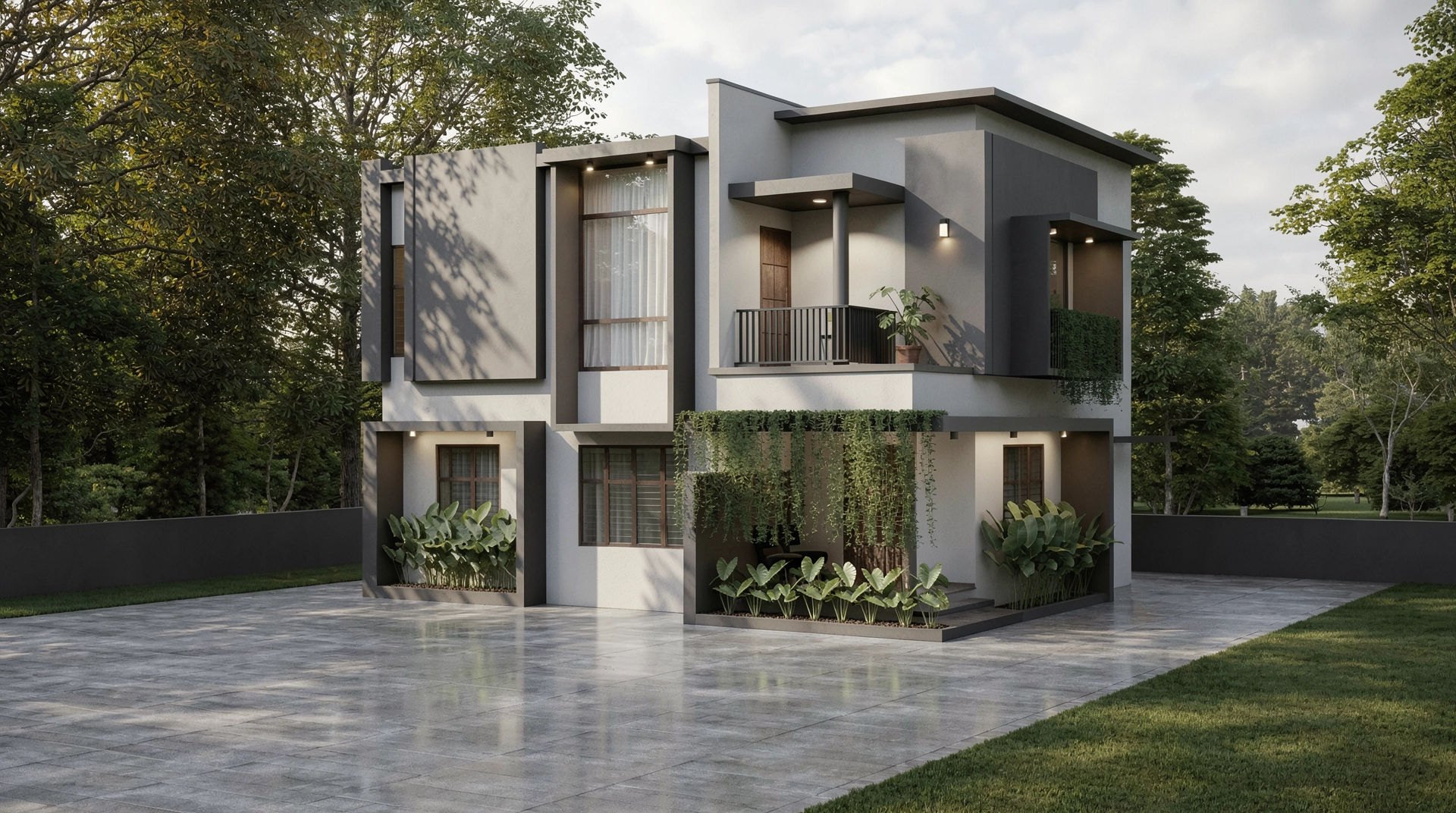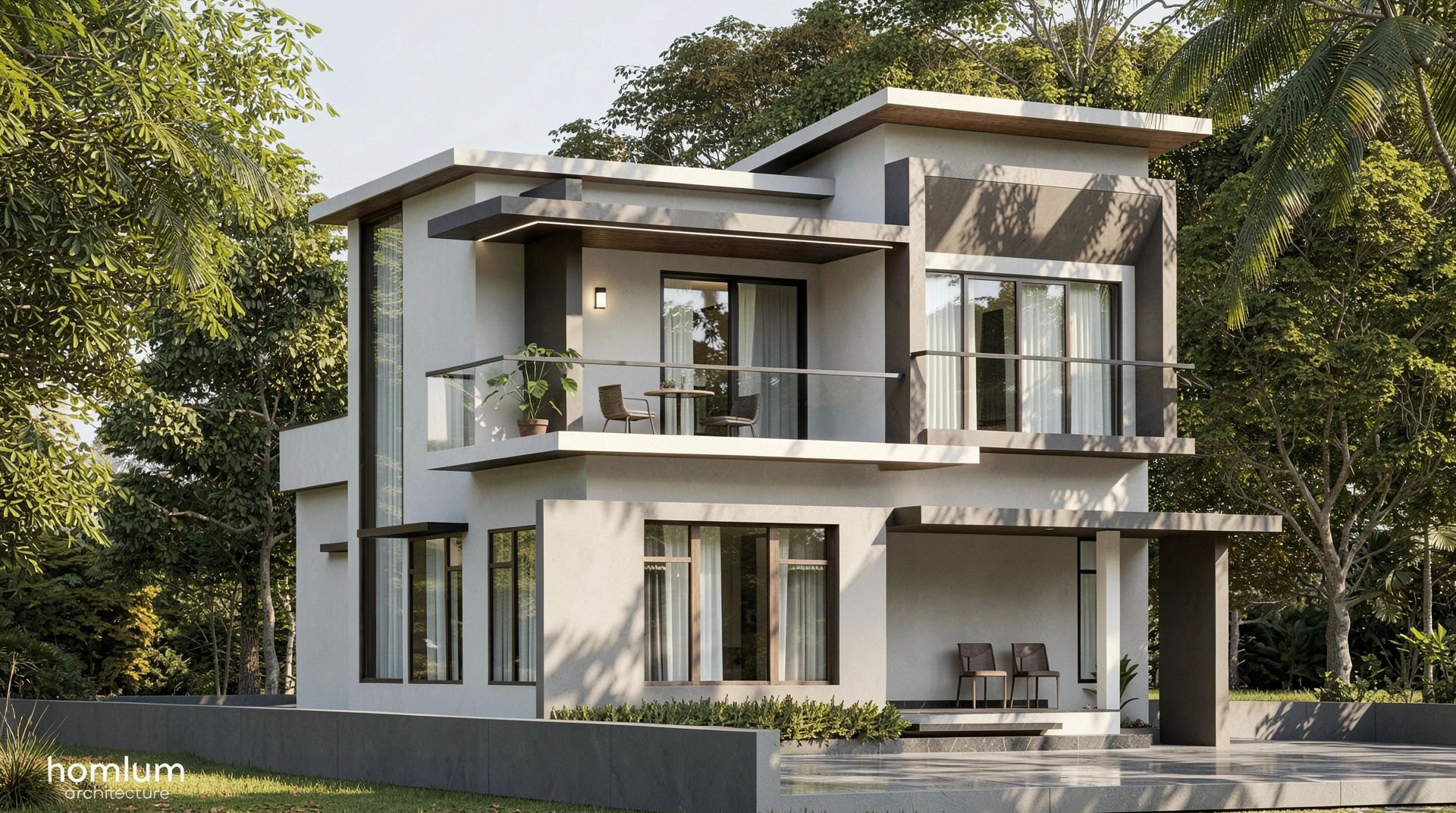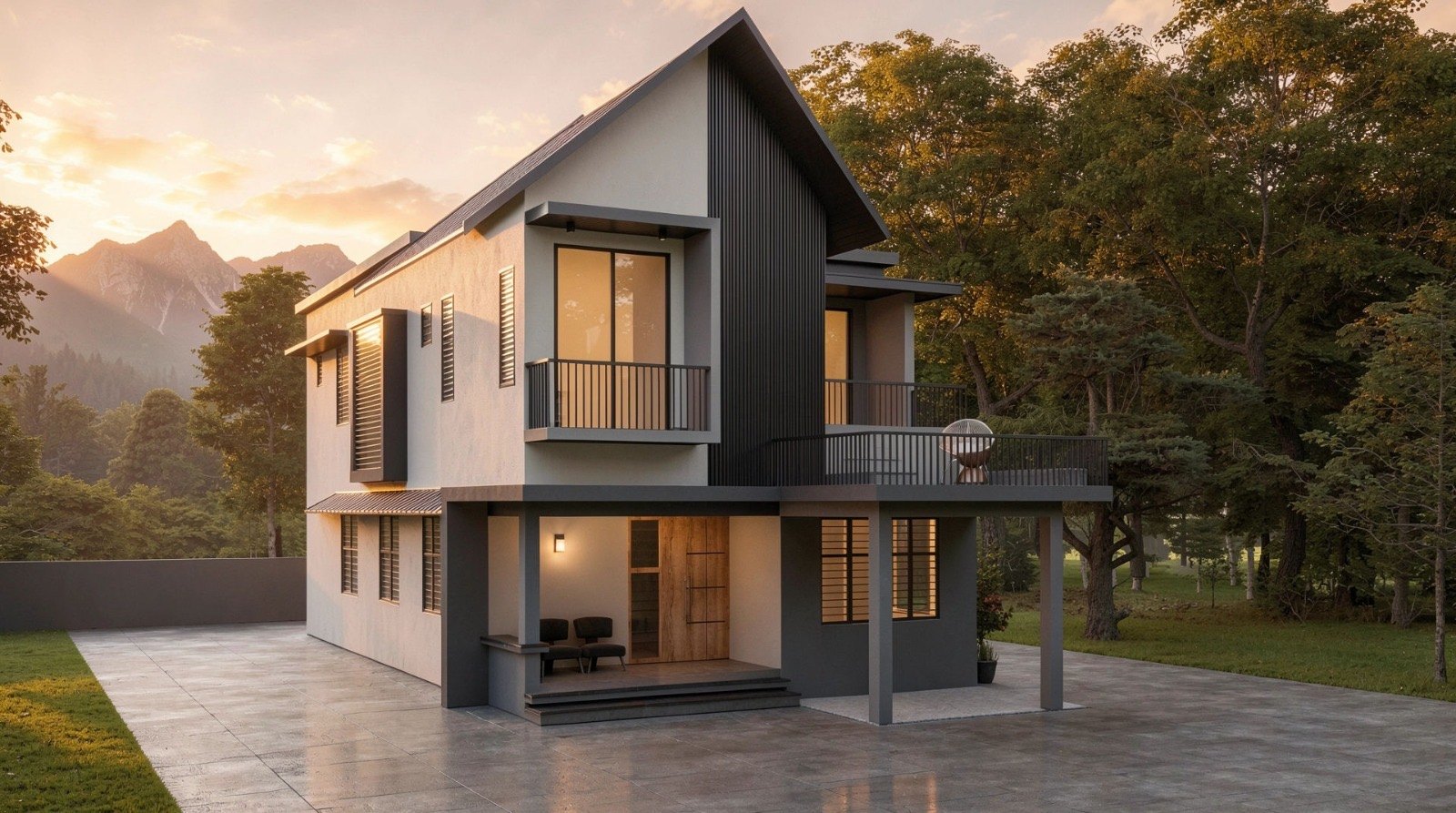
Landscape design for a tropical Kerala garden.
7 min readBy Homlum Architecture

Good landscape design for a tropical Kerala garden is less about choosing pretty plants and more about working with heavy rain, strong sun and fast growth. A garden that ignores these turns into a muddy yard in the monsoon and a dry, tired patch by April. This guide covers planting, shade trees, paving, lawns, existing trees and coconut palms, and gardens on courtyards and terraces.
Start with the site, not the plant list.
Before anyone suggests plants, walk the plot and note what is already there. Where does water collect after a heavy shower? Which corners get the harsh afternoon sun, and which stay in shade most of the day? Where will people actually walk, park and sit?
Soil and terrain vary a great deal across Kerala, and the garden should respond to them:
- Coastal plots often have sandy soil that drains fast and holds few nutrients, plus salty wind. Hardy, wind-tolerant planting and generous mulch help.
- Midland laterite is common from the central districts northwards. It drains reasonably well but can be hard and lean, so planting beds usually need improved soil.
- Backwater and low-lying areas can have heavy clay and a high water table. Raised beds and careful drainage matter more than irrigation.
- Hill plots in Wayanad or Idukki are cooler and often steep. Terracing, retaining edges and dense groundcover keep soil from washing away on slopes.
If you are still planning the house, involve the garden early, because levels, drainage outlets and tank positions are hard to change later. Our guide to designing a house for the monsoon explains how levels and drainage are set.
Choosing low-maintenance plants for a Kerala garden.
The easiest gardens are planted with species that already grow well in the region. Many Kerala households already grow a useful mix: curry leaf, hibiscus, ixora, jasmine, banana, papaya, gooseberry and a few vegetables near the kitchen.
A few principles keep maintenance low:
- Plant in layers: a canopy of trees, a middle layer of shrubs and a ground layer of low plants or mulch. Layers shade the soil and reduce weeding.
- Group plants by how much water and sun they need, so a single watering routine suits each bed.
- Leave space for growth. In this climate a small shrub can fill a bed within a couple of seasons.
- Use mulch, such as dry leaves or coconut husk, to keep soil moist in the dry months and stop it splashing in heavy rain.
Shade trees, coconut palms and existing trees.
Trees do more for comfort than any other part of a garden. A well-placed tree on the west side shades walls and windows through hot afternoons and cools the air around the house. Fruit trees such as mango and jackfruit are familiar choices, but they grow large, so give them room and keep them clear of the roof, the septic tank and the boundary wall.
If the plot already has mature trees, survey them before the house is drawn. During construction, protect the area under its canopy: no dumping of soil, no cement washing and no parking of machinery. The distance a tree should be from foundations depends on the species, the soil and the type of foundation, so ask your structural engineer for advice on any tree close to the building.
Coconut palms deserve their own thought. They give light, moving shade and suit almost any Kerala garden, but falling nuts and fronds are a real hazard. Keep car parking, play areas and seating out from under them, or arrange regular harvesting and cleaning.
Plan the garden around shade, drainage and the trees you already have, and the planting becomes the easy part.
Paving that drains, and lawns versus groundcover.
Hard paving is where many Kerala gardens go wrong. A yard covered edge to edge in concrete or tightly laid paving sends every drop of rain towards the house, the road or the neighbours.
Better options let water soak into the ground:
- Gravel or crushed stone for paths and parking, with a firm edge to hold it in place.
- Stepping stones or laterite blocks set in grass or groundcover.
- Grass pavers or open-jointed paving where cars need a firm surface.
- Solid paving only where it is really needed, sloped away from the house towards a planted area, a drain or a recharge pit.
This works well alongside rainwater harvesting for your home, where surface water from the yard is directed into the ground rather than the street.
A lawn looks generous, but it is one of the most demanding parts of a garden here. It grows fast in the monsoon, needs regular mowing, and needs watering through the dry months. Shaded lawns under trees often thin out. For many homes a small lawn where children play, with groundcover, ferns or mulched beds elsewhere, gives the same green feel with far less work.
Courtyard and terrace gardens.
A courtyard brings the garden inside the house. In a traditional nadumuttam, the open central courtyard of a Kerala home, planting is usually kept simple: a tulsi stand, a few pots, or a small bed that tolerates shade and rain. The key details are a floor that drains quickly, an outlet that will not clog with leaves, and no standing water that breeds mosquitoes. Our article on the nadumuttam courtyard house covers how these spaces are planned.
Terrace and roof gardens need more care than they appear to:
- A structural engineer should confirm the roof can carry the weight of wet soil, planters and people.
- The roof needs sound waterproofing, a protective layer and a root barrier under any soil bed.
- A drainage layer and outlets that are easy to reach and clean are essential, because a blocked outlet in the monsoon can flood the terrace.
- Containers and raised planters are easier to manage and repair than soil spread across the slab.
- A tap nearby makes watering in the dry months realistic.
Common questions.
Which plants need the least maintenance in a Kerala garden?
Plants that already grow well locally usually need the least care. Ask a nearby nursery what does well in your soil and on your side of the state, since a coastal garden and a hill garden behave very differently. Planting in layers and using mulch also cuts down on weeding and watering.
Is a lawn a good idea in Kerala?
A lawn can work, but it needs frequent mowing in the monsoon and watering in the dry months. It also struggles under heavy shade. Many families keep a small lawn for play and use groundcover or mulched beds for the rest.
Can I make a garden on my terrace?
Yes, if the roof is checked by a structural engineer and properly waterproofed. Use a root barrier, a drainage layer and outlets you can clean easily. Planters and raised beds are simpler to maintain than loose soil across the whole slab.
How far should trees be from the house?
There is no single answer, because it depends on the tree, the soil and the foundation. Large trees such as mango and jackfruit need much more room than small flowering trees. Ask your architect and structural engineer to review any tree close to the building.
If you are planning a garden around a new or existing home anywhere in Kerala, talk to us and we can look at your site together.