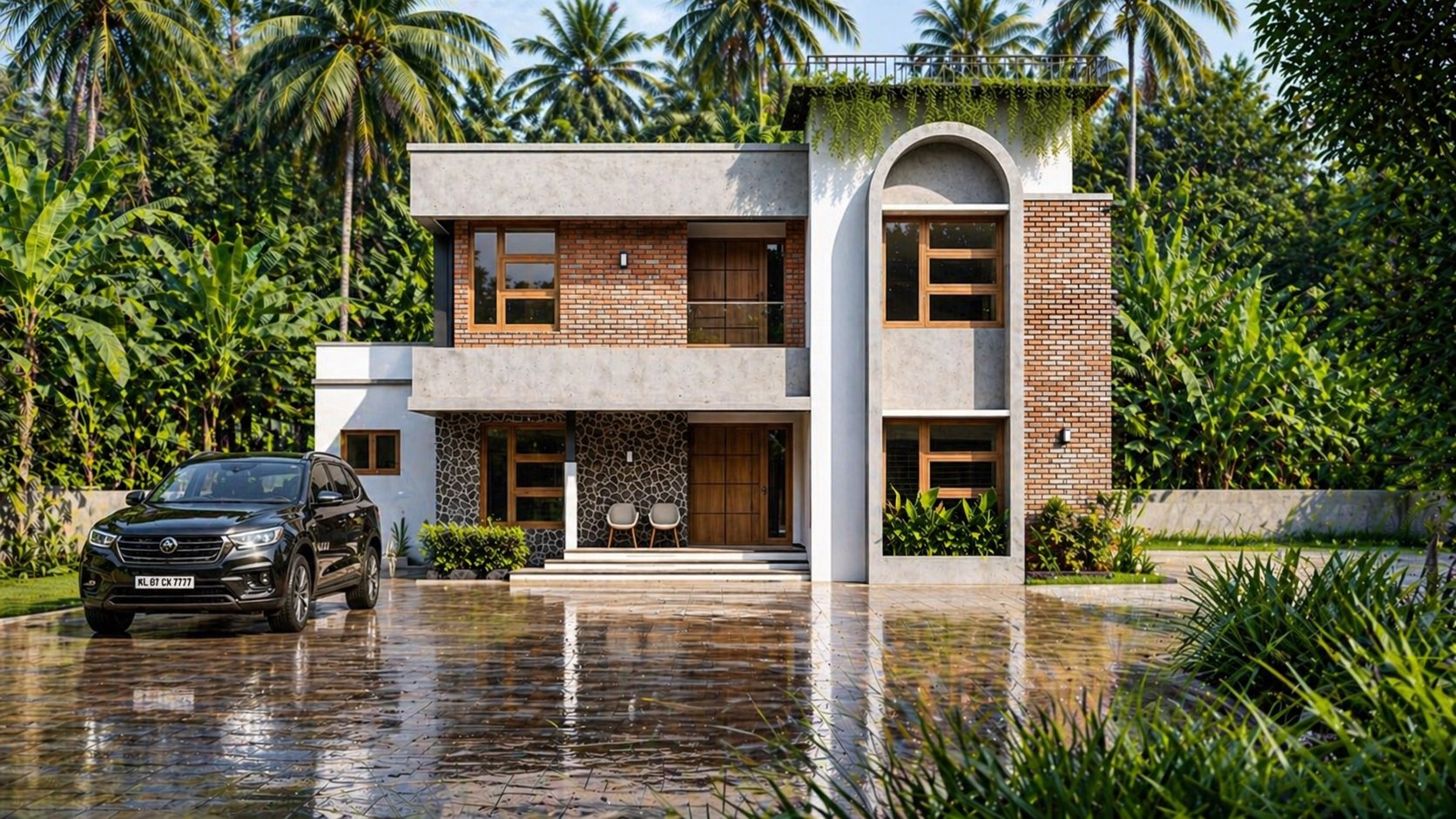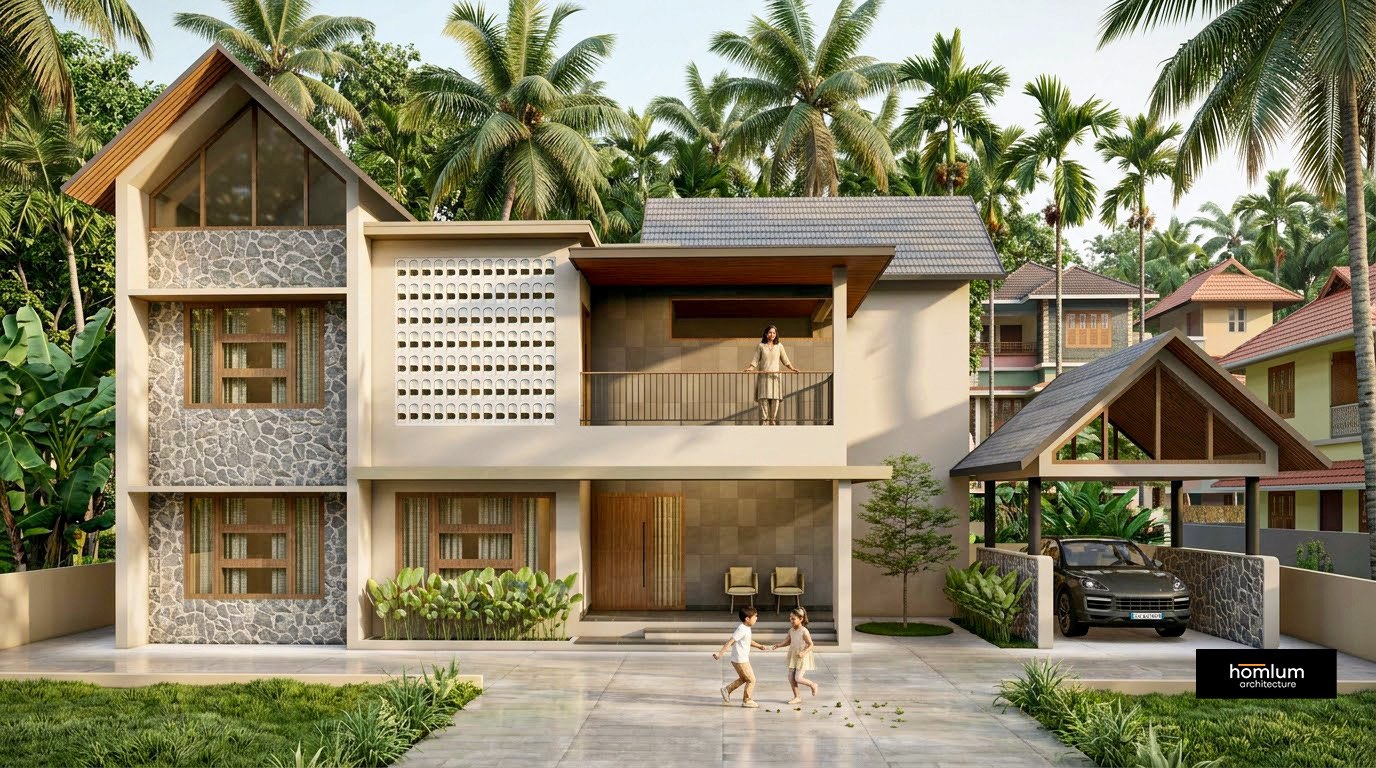
Building with laterite in Kerala.
6 min readBy Homlum Architecture
Laterite has been one of Kerala's main walling materials for generations, and many homeowners still ask whether building with laterite makes sense for a new house. It is local, it suits the climate and it looks good exposed, but it also absorbs water and varies a great deal in quality. This guide explains where laterite comes from, how it is used, and how to finish and protect it so it lasts.
What laterite is and where it is found.
Laterite is a reddish, porous rock formed when certain soils and rocks weather over a very long time in hot, wet conditions. It is rich in iron, which gives it its colour. In Malayalam it is commonly called vettukallu, meaning cut stone, because it is cut straight from the ground in blocks.
Laterite is most associated with the northern districts and parts of the midlands, where it lies close to the surface and is quarried widely. In the southern districts, the backwaters and the hills, other materials such as burnt brick, concrete blocks and granite are often more common, and laterite may have to travel further. That affects availability and cost, so ask locally before you settle on it.
A useful property is that laterite is relatively soft when freshly cut and hardens as it dries and is exposed to air. That makes it easy to cut and dress into blocks, and it becomes more durable once it is in the wall.
How laterite is used in a house.
Laterite is versatile. The common uses are:
- Walls. Laterite blocks are used as infill walls within a reinforced concrete frame, and in traditional and smaller houses as load-bearing walls. Whether load-bearing walls are suitable for your design is a decision for a structural engineer, based on the building, the soil and the quality of the blocks.
- Cladding. Thin laterite slabs or tiles can be fixed onto concrete or block walls to give the look of a laterite wall on a feature wall, a gate pillar or a facade.
- Compound walls and retaining walls. Laterite is widely used for boundary walls, and on sloping plots for low retaining walls and terracing, with proper drainage behind.
- Plinths and steps. Dressed laterite is used for plinth courses, steps and garden edging, though the plinth needs protection from rising damp.
Machine-cut blocks are more uniform in size than hand-cut ones. That gives straighter walls and thinner mortar joints, and makes exposed walls look neater.
Strengths and weaknesses in the Kerala climate.
Laterite has real advantages. It is a local material, which suits a regional architecture and can reduce transport. Blocks are large, so walls go up quickly in experienced hands. It takes well to both cement and lime-based mortars and plasters. Exposed, it gives a warm, natural finish that weathers into the landscape.
Its main weakness is water. Laterite is porous, so it soaks up rain and rising damp. A wall that stays wet grows moss and algae, shows dark staining, and can let damp through to the inside face. Blocks also vary. Some have soft clay pockets or crumbly patches that wear away faster than the rest.
Laterite performs well in Kerala as long as the design keeps water off the top, away from the base and out of the joints.
Finishing, sealing and protecting from moisture.
You can plaster laterite or leave it exposed. Plastered walls are simpler to maintain and give a smooth painted finish. Exposed laterite looks distinctive, but needs more care in detailing and upkeep.
For an exposed laterite wall, ask your architect and contractor about:
- A damp-proof course at plinth level, so ground moisture does not rise into the wall.
- Copings on top of compound walls and parapets, projecting beyond the face with a drip underneath so rain falls clear.
- Deep roof overhangs and sunshades to keep driving rain off the wall faces.
- Neat, well-filled mortar joints, raked or pointed so water does not sit in them.
- A clear, breathable water-repellent treatment, applied once the wall is clean and dry, and renewed as the manufacturer recommends.
- Ground levels and drainage that slope away from the wall, so splashback does not keep the base wet.
Avoid coatings that trap moisture inside the stone, as they can cause flaking and patchy staining. Our guides to protecting a home from damp and termites and to materials for a humid climate go into these details.
Sourcing good laterite blocks.
Quality depends on the quarry, the depth the blocks are cut from and how they are handled. Some practical checks:
- Visit the quarry or yard if you can, and look at a good number of blocks, not just a sample.
- Look for even colour and texture, sharp edges and few soft or clay-filled patches.
- Reject blocks that crumble at the corners or have large cavities.
- Ask for blocks from the same source for the whole job, so colour and quality stay consistent on exposed walls.
- Allow time for freshly cut blocks to dry before building, as your contractor advises.
- Ask the supplier to confirm the quarry operates with the required permissions.
Quarrying changes the land, and rules on it are tightened or revised from time to time. Buying from a reliable, permitted source protects you from supply problems mid-way through the build. If you are restoring an older house with laterite walls, our article on renovating an old Kerala house covers repair and matching new work to old.
Common questions.
Is laterite good for building a house in Kerala?
Yes, laterite is a proven walling material in Kerala, especially in the north where it is quarried. It works well when blocks are of good quality and the design protects walls from rain and ground moisture. A structural engineer should confirm how it is used in your building.
Does laterite absorb water?
Yes. Laterite is porous and absorbs water, which is why damp-proofing, copings, overhangs and good drainage matter. Exposed laterite is usually treated with a breathable water repellent that needs renewing over time.
Should laterite walls be plastered?
Not necessarily. Plastering makes maintenance simpler and suits most interiors. Exposed laterite works well on sheltered faces and compound walls, provided the detailing keeps water off and you accept some weathering and periodic sealing.
How do I remove moss from a laterite wall?
Clean it gently with a stiff brush and water, avoiding harsh pressure washing that can erode the surface. Once the wall is dry, a breathable water-repellent treatment helps slow regrowth. If moss keeps returning, look for the source of the water, such as a leaking gutter or missing coping.
If you are thinking about laterite for a new home or a compound wall, talk to us and we can look at how it would suit your site and design.