Setbacks, coverage and FAR explained for Kerala homeowners.
7 min readBy Homlum Architecture

Two plots of the same size can allow very different houses. The difference usually comes down to three planning terms: setbacks, coverage and FAR. This guide explains setbacks, coverage and FAR for Kerala homeowners in plain language, shows how they shape what fits on a plot, and lists what to check before you buy land or start a design.
All three are set by the Kerala building rules for panchayats and for municipalities and corporations. The rules are amended from time to time, and the limits depend on the type of building, the plot size, the road it faces and the area it is in. So this article explains the ideas, not the numbers. Confirm the current figures for your plot with your local body or your architect.
What setbacks mean on a Kerala plot.
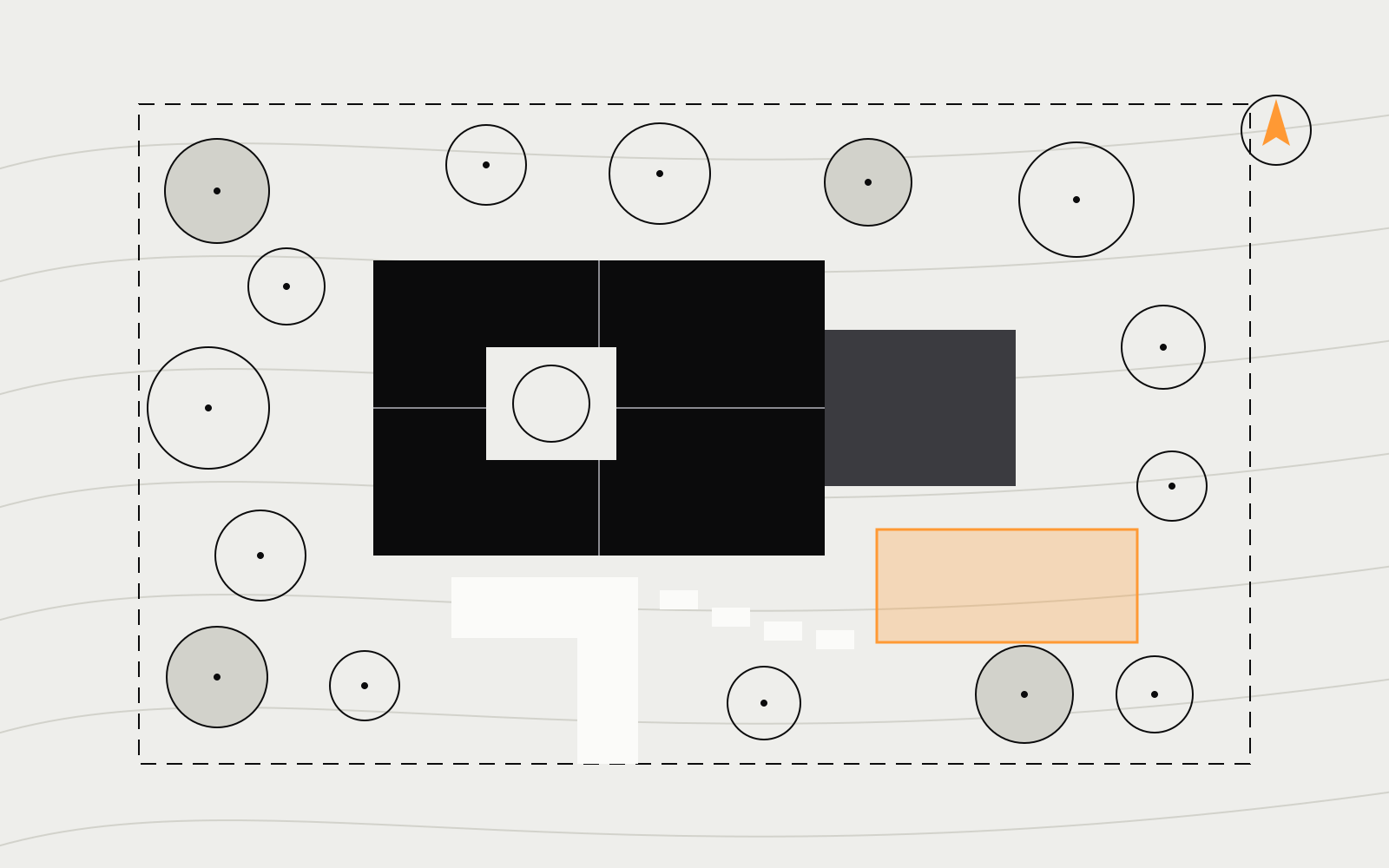
A setback is the open space you must leave between your building and the boundary of the plot. There is a front setback towards the road, a rear setback, and setbacks on each side. Together they form a margin around the plot where the main building cannot go.
Setbacks exist for good reasons. They keep light and air moving between buildings, give access for maintenance and emergencies, reduce the spread of fire and keep a little privacy between neighbours.
A few practical points come up again and again:
- The front setback is usually measured from the road boundary, or from a future road line if widening is proposed.
- Required setbacks can change with the height of the building or the number of floors.
- Openings such as windows and doors facing a boundary may need more distance than a blank wall.
- Some projections, such as sunshades and certain balconies or steps, may be allowed into the setback within limits, and others are not.
- Structures like a compound wall, a gate or a well have their own rules about where they can sit.
Coverage: how much ground the house can take.
Coverage is the share of the plot that buildings are allowed to cover at ground level. It is measured from the footprint, the outline of the building on the ground, compared with the total plot area.
Coverage limits stop a plot from being built over from edge to edge. They protect the open ground that lets rainwater soak in, keeps the surroundings cooler and leaves space for a garden, parking or a sit-out. On a small plot, coverage and setbacks together often decide the footprint before any design work begins.
When you count coverage, remember the car porch, a separate store or a utility block. Covered structures generally count towards coverage, so a large porch can eat into the space available for rooms. Ask your architect to show the coverage calculation early, while the plan is still flexible.
FAR: how much floor area you can build in total.
FAR stands for floor area ratio. It compares the total floor area of the building, across all floors, with the area of the plot. Where coverage limits how much ground you use, FAR limits how much floor space you can build overall.
A house can either spread out on one level or rise over two or three floors. Coverage controls the spread. FAR controls the total. Height limits, which are often linked to the width of the road in front, control how high you can go. A design has to satisfy all three at once.
Setbacks fix where you can build, coverage fixes how much ground you can use, and FAR fixes how much you can build in total.
What counts as floor area for FAR is defined in the rules, and not every space is treated the same way. Staircases, balconies, terraces, lift wells and covered parking may be counted, partly counted or excluded depending on how they are designed and what the current rules say.
Corner plots and road widening.
A corner plot faces two roads. That brings light, views and a choice of entrances, but it can also mean front-type setbacks on both road sides. On a small or narrow plot, that can shrink the buildable area noticeably. Look at the plot on paper with both roads in mind before you judge its size.
Road widening is the other big variable. Many roads in Kerala towns and along growing routes have a proposed future width marked in a master plan, a town planning scheme or a notified alignment. Where that applies, the setback may be measured from the future road line rather than the present edge of the road. In some cases part of the plot may be reserved for the road itself.
Plots near national and state highways, railways, rivers, the coast or protected areas can also carry extra restrictions. These come from different authorities, so a plot can look ordinary on site and still have limits you cannot see.
Why to check the rules before buying a plot.
The best time to understand setbacks, coverage and FAR is before you pay an advance on land.
Before buying, it is worth asking an architect to do a quick feasibility check. Bring the survey sketch, the documents and the address. They can usually tell you:
- What the zoning and land use classification of the plot is.
- Whether there is any road widening or other reservation affecting it.
- Roughly what footprint the setbacks and coverage leave you.
- How much total floor area the FAR allows, and over how many floors.
- Whether the slope, shape or access will make building harder.
Plot shape matters as much as plot area. A long, narrow plot or an irregular one may lose more to setbacks than a regular plot of the same size. Sloping plots, common in the midlands and the hills, bring their own questions about levels, retaining walls and access. If your plot is tight, our guide to small plot house design shows how a good plan makes the most of limited space.
If you are at the very beginning, start with planning a house in Kerala, and when you are ready to apply, read our guide to the building permit process in Kerala.
Common questions.
What is the difference between coverage and FAR?
Coverage limits how much of the plot the building can occupy at ground level. FAR limits the total floor area across all floors compared with the plot area. A house can meet one and break the other, so both must be checked.
Can I build in the setback area if my neighbour agrees?
A neighbour's agreement does not change the building rules. Setbacks are set by the rules and enforced by the local body, and building into them can block your permit or occupancy certificate. Ask your architect whether any relaxation exists for your case, rather than relying on informal agreements.
Do setbacks apply to a compound wall or a car porch?
Compound walls and gates have their own rules, and they are generally treated differently from the main building. A car porch is usually part of the building and may need to respect setbacks and count towards coverage. Check the current rules for your plot before you place either.
How do I find the setbacks for my plot?
Ask your local body or an architect who works regularly in your area. They will look at the plot size, road width, zoning, building type and any widening line. Get this confirmed in writing before you commit to a design.
If you would like someone to check what your plot allows before you buy or design, get in touch with the studio.